5 Best AI Tools for Digital Painting and Sketching
Upgrade your digital art workflow with the 5 best AI tools for painting. Discover features that assist with shading, coloring, and composition.
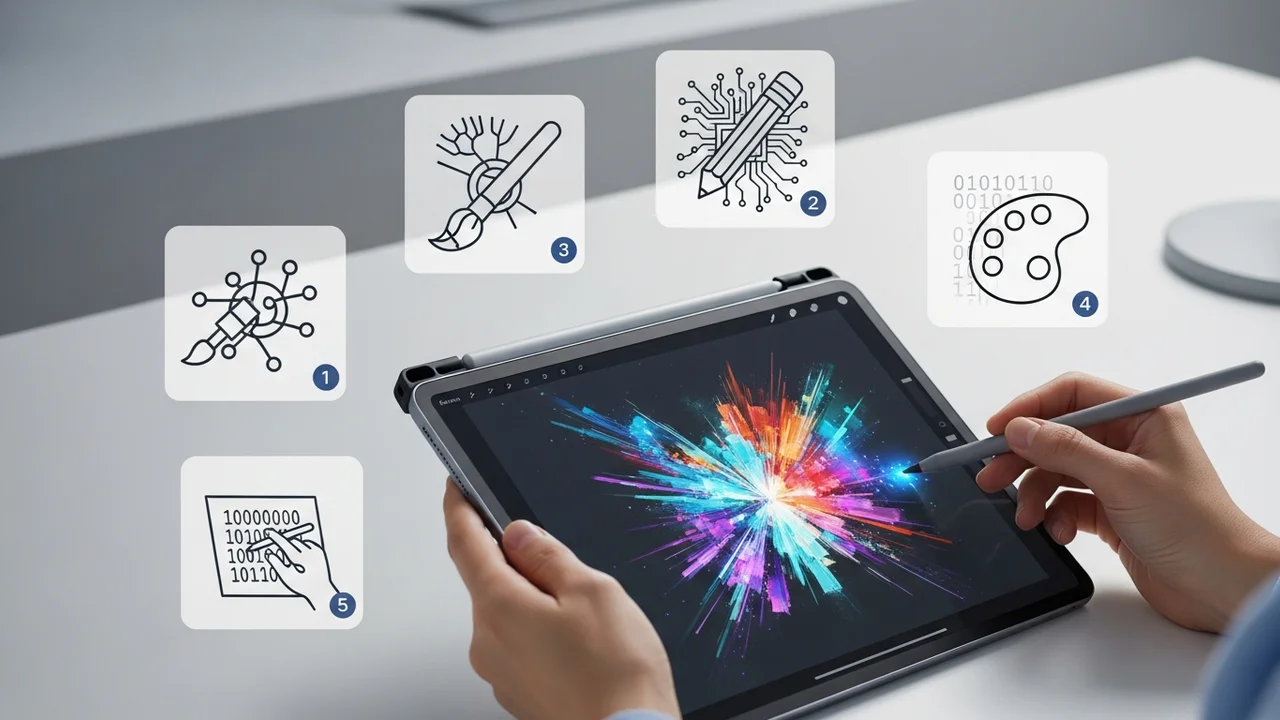
5 Best AI Tools for Digital Painting and Sketching
Upgrade your digital art workflow with the 5 best AI tools for painting. Discover features that assist with shading, coloring, and composition.
If you have been staring at a blank canvas lately, feeling like your digital brush strokes just aren't hitting the mark, you are definitely not alone. The world of digital art is shifting fast, and honestly, it is getting pretty exciting. We are moving past the days where you had to manually shade every single pixel or spend hours trying to get the lighting just right. Now, we have AI tools that act like a super-powered assistant sitting right next to you, ready to handle the tedious stuff so you can focus on the actual creative vision.
Top AI Painting Software and Digital Sketching Tools
When we talk about AI in digital painting, we are looking for tools that understand the nuance of light, texture, and composition. It is not just about generating an image from a prompt; it is about enhancing the artist's hand. Here are the top contenders that are currently changing the game for illustrators and concept artists.
First up is Adobe Photoshop with Generative Fill. You probably already use it, but the AI integration has turned it into a powerhouse. It is perfect for expanding backgrounds or adding elements to a sketch that you just don't feel like drawing from scratch. It is a subscription-based model, usually around $20.99/month, but for the professional workflow, it is hard to beat.
Next, we have Corel Painter. This one is a classic for a reason. Its AI-powered 'Auto-Painting' features are incredible for turning photos into paintings that actually look like they were done with real oil or watercolor brushes. It is a one-time purchase of about $429, which is a bit steep, but it is a serious tool for serious artists.
Then there is Krita, which is the hero of the open-source world. It has been integrating AI plugins like Stable Diffusion, allowing you to generate textures or fill in gaps directly within your painting environment. The best part? It is completely free. It is a fantastic entry point if you want to experiment with AI without dropping a ton of cash.
Don't overlook Clip Studio Paint. It has recently added AI-assisted shading and coloring features that are specifically designed for comic and manga artists. If you are doing a lot of line art, this is going to save you so much time. They offer a subscription or a one-time purchase option, usually around $50 for the Pro version.
Finally, Procreate on the iPad is starting to lean into AI-assisted features for smoothing and composition. While it is not a full-blown 'AI generator,' its predictive stroke technology and new AI-driven filters make it the gold standard for mobile sketching. It is a one-time payment of $12.99, which is basically a steal.
Comparing AI Features for Digital Artists
So, how do you choose? If you are a professional concept artist, Photoshop is your best bet because of the integration with the rest of the Adobe suite. If you are a hobbyist or a student, Krita is going to give you the most bang for your buck. For those who live on their iPad, Procreate is non-negotiable.
The main difference lies in how they handle 'AI.' Some tools, like Photoshop, use cloud-based generative AI to create new content. Others, like Clip Studio Paint, use local AI to help with repetitive tasks like flatting colors or basic shading. Think about what part of your process you hate the most. If you hate coloring, look for tools with strong AI-assisted flatting. If you hate backgrounds, look for generative fill capabilities.
Practical Use Cases for AI in Your Workflow
Imagine you are working on a character design. You have the sketch, but you are stuck on the color palette. You can use an AI tool to generate five different color variations based on a mood board you created. You don't have to use the AI's output directly, but it gives you a starting point that you can then paint over and refine. This is the sweet spot—using AI to break through creative blocks rather than letting it do the whole job for you.
Another great use case is texture generation. If you are painting a fantasy environment, you can use AI to generate custom stone or wood textures that you can then warp and blend into your scene. It saves you from having to hunt for stock photos that never quite match the lighting of your painting.
Remember, these tools are meant to be an extension of your creativity. Whether you are using a high-end subscription service or a free open-source plugin, the goal is to get your ideas out of your head and onto the screen faster. Keep experimenting, keep sketching, and don't be afraid to let the AI handle the heavy lifting while you handle the soul of the piece.
:max_bytes(150000):strip_icc()/277019-baked-pork-chops-with-cream-of-mushroom-soup-DDMFS-beauty-4x3-BG-7505-5762b731cf30447d9cbbbbbf387beafa.jpg)