Suno AI vs Udio for Songwriting
A comparison of Suno AI and Udio. Which AI music tool offers better composition, vocal quality, and creative control for songwriters?
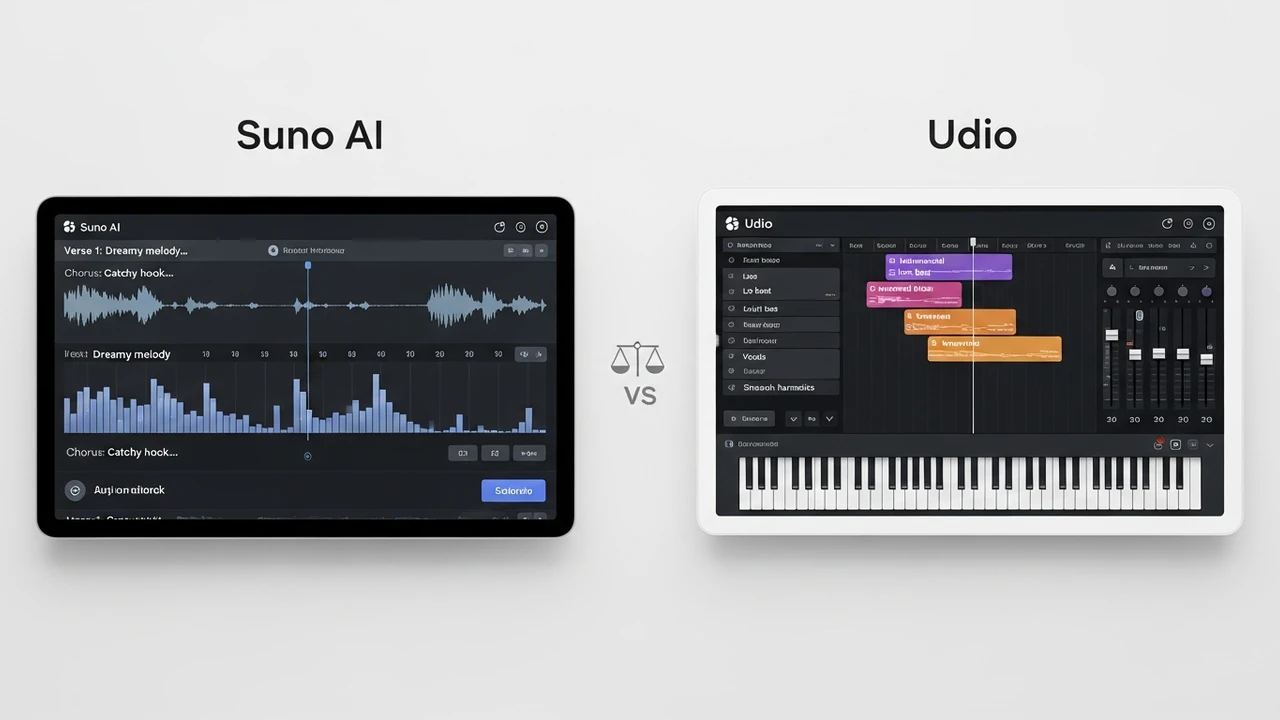
Suno AI vs Udio Which AI Music Tool Wins
A comparison of Suno AI and Udio. Which AI music tool offers better composition, vocal quality, and creative control for songwriters?
Understanding the Rise of AI Music Generation
If you have been hanging around the creative tech space lately, you have definitely heard the buzz about AI music generators. It feels like just yesterday we were struggling to get a simple MIDI melody out of a basic algorithm, and now we are sitting here with tools like Suno AI and Udio that can churn out radio-ready tracks in seconds. It is honestly wild. Whether you are a bedroom producer looking for a backing track or a songwriter trying to get a melody out of your head, these platforms are changing the game. But the big question remains: which one should you actually spend your time on? Let’s break it down.
Deep Dive into Suno AI Features and Capabilities
Suno AI has been the talk of the town for a while now, and for good reason. It is incredibly accessible. You literally just type in a prompt—like 'upbeat 80s synth-pop about a rainy day in Tokyo'—and it spits out a full song with lyrics, vocals, and instrumentation. The magic of Suno lies in its ability to handle complex song structures. It understands verses, choruses, bridges, and even those weird little instrumental breaks you might want. For someone who doesn't know a lick of music theory, it is like having a session musician living in your browser.
Exploring Udio and Its Unique Sound Quality
Then there is Udio. If Suno is the 'get it done fast' tool, Udio feels like the 'audiophile's choice.' When you first listen to a track generated by Udio, you might notice the fidelity is just a bit crisper. The vocal synthesis in Udio often feels more nuanced, capturing those little breathy moments or stylistic inflections that make a singer sound human rather than robotic. It is particularly good at handling genres that require a bit more grit or texture, like blues, jazz, or complex indie rock. If you are looking for something that sounds like it was recorded in a real studio, Udio is usually the one that hits the mark.
Comparing Creative Control and Prompt Engineering
When you are in the thick of it, the difference in creative control is where things get interesting. Suno is great at following instructions. If you tell it to change the tempo or add a specific instrument, it usually listens. Udio, on the other hand, gives you a bit more room to 'extend' your tracks. You can take a 30-second clip you love and tell the AI to keep going, adding a solo or a new section. This makes Udio feel more like a collaborative partner than just a 'generate and forget' machine. Both platforms rely heavily on your ability to write good prompts, though. You have to learn the language of the AI—using terms like 'lo-fi,' 'reverb-heavy,' or 'syncopated rhythm' really helps get the result you want.
Use Cases for Songwriters and Content Creators
So, who are these tools for? If you are a content creator making YouTube videos, Suno is a lifesaver for background music that won't get you a copyright strike. You can generate a custom track that fits the mood of your video perfectly. For songwriters, these tools are incredible for prototyping. Instead of spending three hours trying to figure out a chord progression, you can generate five different versions in ten minutes, pick the one that works, and then record your own vocals over it. It is all about speeding up that initial creative spark.
Pricing Models and Subscription Tiers
Let’s talk money because that is always the elephant in the room. Suno offers a free tier that lets you play around with a few generations a day, which is great for testing the waters. Their paid plans start around $8 to $10 a month, giving you more credits and, crucially, commercial usage rights. Udio has a similar structure. They have a free tier, but their paid plans are often tiered based on how many high-quality generations you need. If you are planning to release music on Spotify or Apple Music, you definitely need to be on a paid plan to ensure you have the rights to the content you are creating.
Final Thoughts on Choosing Your AI Music Partner
At the end of the day, the 'winner' really depends on what you are trying to build. If you want speed, ease of use, and a massive library of styles, Suno is probably your best bet. It is the tool that feels most like a social media platform for music. If you are chasing that high-fidelity sound and want more control over the song's evolution, Udio is going to be your new best friend. Both are evolving so fast that what is true today might change next month, so the best advice is to jump in, use your free credits, and see which one feels more natural to your own creative flow. There is no right answer, just the one that helps you make the music you want to hear.
:max_bytes(150000):strip_icc()/277019-baked-pork-chops-with-cream-of-mushroom-soup-DDMFS-beauty-4x3-BG-7505-5762b731cf30447d9cbbbbbf387beafa.jpg)