Lalal.ai vs Moises for Stem Separation
A comparison of Lalal.ai and Moises. Which AI tool is better for separating drums, bass, and vocals from any audio file?
Lalal ai vs Moises for Stem Separation
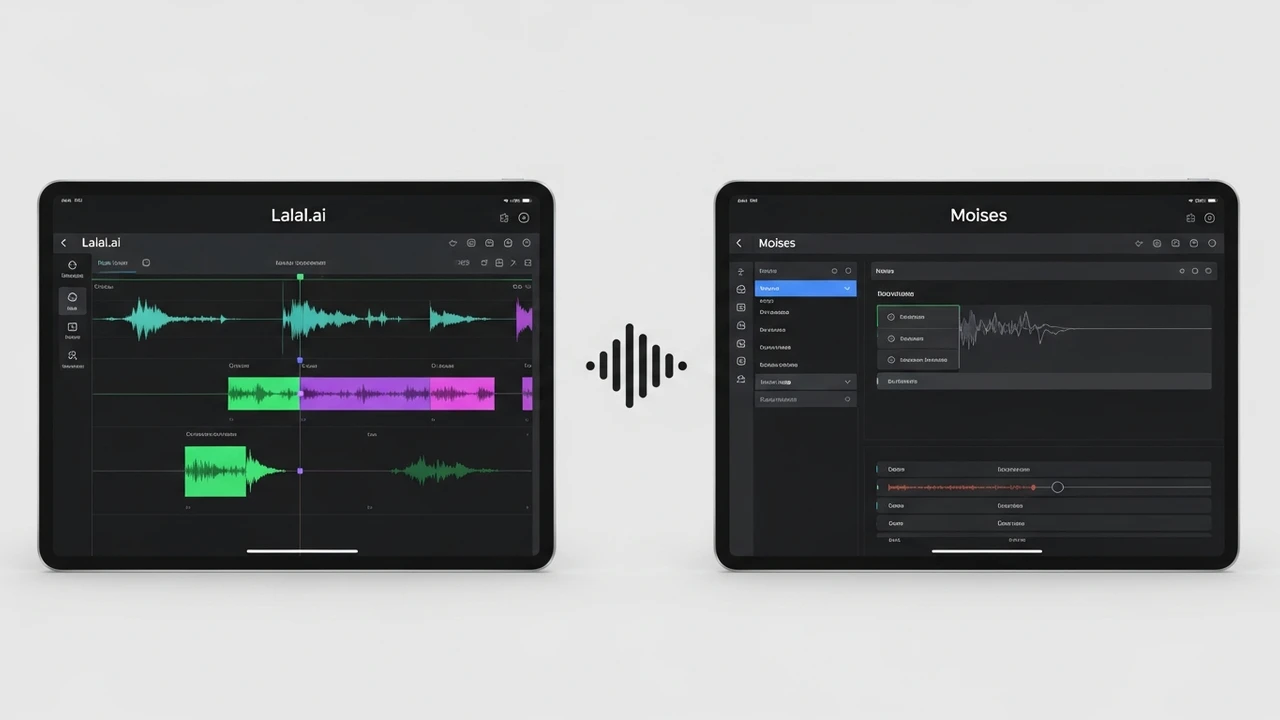
A comparison of Lalal.ai and Moises. Which AI tool is better for separating drums, bass, and vocals from any audio file? If you have ever tried to remix a song, create a karaoke track, or isolate a specific instrument for practice, you know that stem separation used to be a nightmare. It required expensive software, hours of manual EQ work, and a lot of patience. Today, AI has changed the game entirely. Two names keep popping up in every producer's forum: Lalal.ai and Moises. Both promise to split your audio into clean stems, but they go about it in very different ways. Let’s dive into the nitty-gritty of how these tools actually perform in the real world.
Understanding AI Stem Separation Technology
At its core, stem separation is about teaching a neural network to recognize the frequency patterns of specific instruments. Think of it like trying to un-bake a cake. Once the drums, bass, vocals, and synths are mixed together into a single stereo file, the AI has to guess where one ends and the other begins. Both Lalal.ai and Moises use advanced deep learning models to achieve this. Lalal.ai is famous for its Phoenix algorithm, which is incredibly fast and focuses on high-fidelity extraction. Moises, on the other hand, is more of a full-blown ecosystem that includes a mobile app, a web interface, and even a metronome and pitch shifter.
Lalal ai Features and Performance
Lalal.ai is the go-to for people who want a 'get in, get out' experience. You upload your file, select the stems you want (vocals, drums, bass, guitar, piano, etc.), and it spits out the results in seconds. The quality is consistently high, especially when it comes to vocal isolation. It is a web-based tool, meaning you don't need to install anything. This is a huge plus for creators who work across different devices. The interface is clean, minimalist, and doesn't distract you with unnecessary features. If you are a professional producer who just needs a clean vocal track for a remix, this is often the fastest route.
Moises Features and Performance
Moises is much more than just a separator. It is designed for musicians who want to practice and learn. When you upload a track to Moises, it doesn't just give you the stems; it gives you a workspace. You can change the tempo, change the key, and even see the chords in real-time. The mobile app is fantastic for musicians on the go. If you are a guitarist trying to learn a solo, you can isolate the guitar, slow it down to 50% speed, and loop it until you get it right. It is a comprehensive practice tool that happens to have world-class stem separation built-in.
Comparing Pricing Models
Pricing is where these two really diverge. Lalal.ai operates on a credit-based system. You pay for the amount of audio you process. This is great if you only have a few projects a month, as you aren't locked into a monthly subscription. You can buy a pack of 10 minutes or 90 minutes, and those credits stay in your account. Moises, however, pushes a subscription model. While they have a free tier, the real power is in the Premium subscription. It gives you unlimited uploads, longer track lengths, and access to all the advanced practice features. If you are a heavy user, Moises is likely the more cost-effective choice in the long run.
Which Tool Should You Choose
Choosing between them depends entirely on your workflow. If you are a producer or a DJ who just needs to grab a clean vocal or drum loop for a project, Lalal.ai is the winner. It is faster, the quality is top-tier, and the pay-as-you-go model is perfect for occasional use. If you are a musician, a student, or a teacher who needs to practice along with tracks, slow them down, or change keys, Moises is the clear choice. It is an all-in-one practice studio that makes learning music significantly easier. Both tools are miles ahead of where we were five years ago, and honestly, having both in your toolkit isn't a bad idea if you find yourself doing both production and practice regularly.
:max_bytes(150000):strip_icc()/277019-baked-pork-chops-with-cream-of-mushroom-soup-DDMFS-beauty-4x3-BG-7505-5762b731cf30447d9cbbbbbf387beafa.jpg)